September is Rail Safety Month, and we’re here to spread the word. As summer winds down and routines start picking back up, Rail Safety Month is a great reminder to stay alert around railroad tracks, crossings, and stations.
Keep reading to learn the facts behind rail safety — and the simple habits that can help keep everyone safe.
Next Stop…
What is Rail Safety Month?
Why is It Dangerous to Walk on Train Tracks?
5 Essential Rail Safety Tips
How to Cross the Railroad
Railroad Safety Resources
FAQs
Quick Summary
- Rail Safety Month Basics
- Rail Safety Month takes place every September
- Trains are often faster and quieter than people expect
- Trains can take more than a mile to stop
- How to Stay Safe
- Always use designated railroad crossings
- Obey warning lights, gates, and signals
- Stay off the tracks and behind platform safety lines
- Emergency Action Plan
- If your vehicle gets stuck on a crossing, get out immediately and move away from the tracks
- Use the blue ENS sign to report emergencies at railroad crossings
- Other Resources
- Explore rail safety resources from California Operation Lifesaver and Operation Safe Surfs
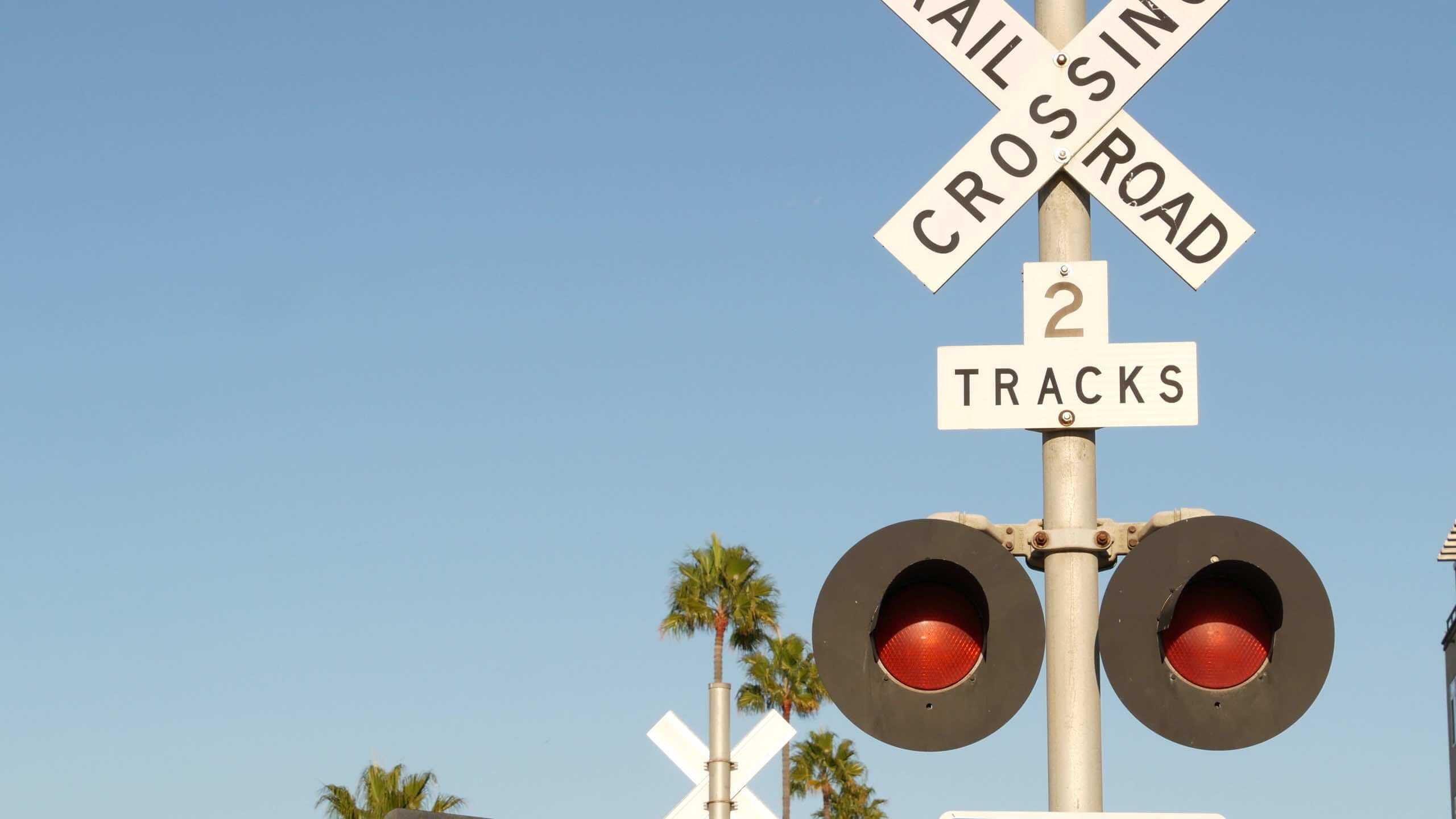
What is Rail Safety Month?
Every September, Rail Safety Month reminds us to stay alert and make safe choices around railroad tracks, crossings, and stations. Led by organizations like Operation Lifesaver, the annual campaign helps educate communities about train track safety and ways to prevent avoidable accidents.
Why is it Dangerous to Walk on Train Tracks?
According to Operation Lifesaver, a person or vehicle is struck by a train every three hours in the United States*. Trains are often much quieter, faster, and closer than people expect. While it may seem like there's plenty of time to move out of the way, trains can approach quickly and take more than a mile to completely stop.
Railroad tracks are also active transportation corridors, not walking paths or shortcuts. Walking on train tracks puts you at risk and can lead to serious or even fatal consequences. The safest choice is always to stay off the tracks, cross only at designated pedestrian or roadway crossings - and when you do cross, look both ways to ensure nothing is coming your way.
Rail Safety 101
5 Essential Rail Safety Tips
- Only cross at designated railroad crossings
Heading to the beach or looking for a shortcut? Always use designated pedestrian or roadway crossings and obey all warning signs, signals, and crossing gates.The potential time saved by trespassing over the tracks is not with the potential consequences. - Stay off the tracks
Railroad tracks are never a safe place to walk, bike, jog, stand, or take photos. Trains can approach from either direction and may be traveling faster and quieter than you expect! - Stay alert near the railroad
Put distractions away when you're near tracks or crossings. Avoid using headphones, looking at your phone, or doing anything that could prevent you from seeing or hearing an approaching train. - Stand behind the safety line
When on the train platform, stay behind the designated platform safety line (you can’t miss it, it’s bright yellow!) until it's time to board. - Know what to do in an emergency
If an emergency occurs at a railroad crossing, locate the blue Emergency Notification System (ENS) sign and call the number provided. For suspicious activity or immediate danger, contact local authorities or call 911. Watch this safety video to learn more.
How to Cross the Railroad
When it comes to railroad crossing safety, the rules are simple: always use designated crossings and never try to beat a train. Before crossing, stop, look both ways, and listen for approaching trains. If warning lights are flashing, gates are lowered, or signals indicate a train is coming, wait until it has completely passed and the crossing is clear.
Remember that trains can travel on any track, in either direction, at any time. Even after one train passes, another may be approaching. When in doubt, wait it out — your life is always worth the few extra moments.
Railroad Safety Resources
Rail safety is a year-round effort, and Pacific Surfliner is proud to support programs that help keep communities informed and safe:
Resources for Teachers and Kids
California Operation Lifesaver offers a variety of educational resources for students, parents, educators, and community groups. From lesson plans and activity sheets to presentations, fact sheets, and safety guides, these tools make it easy to teach railroad safety in an engaging, family-friendly way.
FAQs
When is Rail Safety Month?
Rail Safety Month takes place every September and serves as an annual reminder to stay safe around trains, tracks, and railroad crossings. Led by organizations like Operation Lifesaver, the campaign helps communities learn simple habits that can prevent serious accidents and keep everyone safe.
How long does a train take to stop?
Much longer than most people think. Depending on its speed, weight, and track conditions, a train can take more than a mile to come to a complete stop after the brakes are applied. That's why it's so important to stay off railroad tracks and never try to beat a train at a crossing — by the time an engineer sees a hazard, it may already be too late to stop in time.
How can I stay safe around railroad tracks?
A few simple habits can go a long way. Always cross tracks at designated railroad crossings, obey warning signals and gates, and stay alert whenever you're near tracks or stations. Most importantly, remember that railroad tracks aren't shortcuts, walking paths, or places to play.
What should I do if my vehicle gets stuck on a railroad crossing?
First things first: get out of the vehicle immediately and move far away from the tracks. Then, locate the blue Emergency Notification System (ENS) sign posted near the crossing and call the number listed to report the situation. If a train is approaching or you're unsure what to do next, call 911 as soon as possible.
Where can I find rail safety resources for kids and teachers?
Operation Lifesaver California offers free educational resources designed for students, parents, educators, and community groups. From classroom materials to safety presentations and activities, these resources make it easy to teach kids about railroad safety in an engaging and age-appropriate way.
Do trains always have the right of way at railroad crossings?
They sure do. Trains always have the right of way at railroad crossings, which is why it's important to obey all warning lights, gates, and signals. Even if a train seems far away, it may be traveling faster than it appears and can take more than a mile to come to a complete stop. When in doubt, wait it out!