There’s a lot to love about exploring Southern California on two wheels, especially when your ride comes with ocean views! But whether you’re cruising a coastal bike path, commuting across town, or pedaling the last few miles of your Pacific Surfliner trip, railroad tracks call for a little extra care.
Rails create some unique challenges for cyclists, and trains can’t stop or maneuver around you the way a car can. The good news? A few simple habits can help keep your ride rolling safely.
Before you hop on your bike, here’s what to know whenever your route crosses the rails.
Next Stop…
Why Railroad Safety is Important for Cyclists
6 Rail Safety Tips for Cyclists
Bringing Your Bike on the Pacific Surfliner
Rail Safety Month: Take the Pledge
FAQs
TLDR;
- Railroad Crossings Require Extra Care on Two Wheels
- Rails, uneven surfaces, and wet conditions can create unique hazards for cyclists, so slow down and stay alert whenever your route crosses the tracks.
- A Few Simple Habits Can Help Keep You Safe
- Use designated crossings, walk your bike across at a 90-degree angle when possible, remove distractions, and always obey lights and gates.
- Bikes Are Welcome Aboard the Pacific Surfliner
- Make a bike reservation when you book your ticket, then bring your wheels along for even more exploring once you arrive.
- Make Rail Safety Part of Every Ride
- This Rail Safety Month, brush up on safe habits and take the Rail Safety Pledge to help keep yourself and your community safer around the tracks.
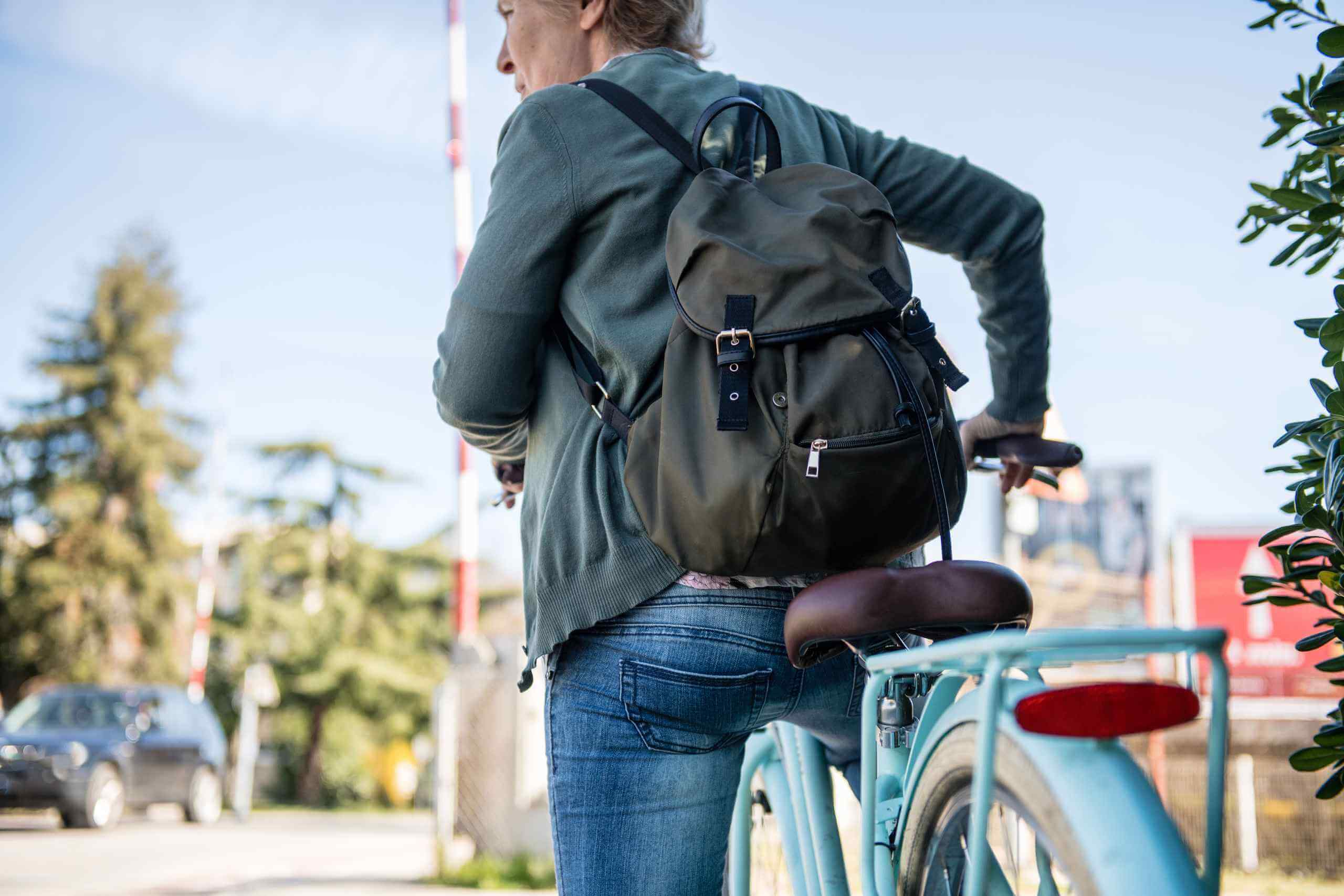
Cyclists Beware: Why Railroad Crossing Require Extra Caution
Railroad crossings can be a little tricky on a bike, even when there isn’t a train in sight. Rails, gaps alongside the tracks, uneven surfaces, and wet conditions can all affect your wheels and balance.
How you cross matters too! Approaching tracks at an angle can increase the chance of one of your bike wheels getting caught alongside the rail. When possible, Operation Lifesaver recommends hopping off your bike and walking it across the tracks at a 90-degree angle (AKA, straight across).
While a set of tracks may look like a temptingly convenient shortcut, stick to the bike-friendly routes. Railroad tracks and the areas alongside them are private property, and riding there is both dangerous and considered trespassing.
Finally, never try to beat a train across the tracks or assume it can slow down for you. If you see a train coming, wait for it to pass, follow all crossing signals, and make sure the tracks are completely clear before continuing your ride.
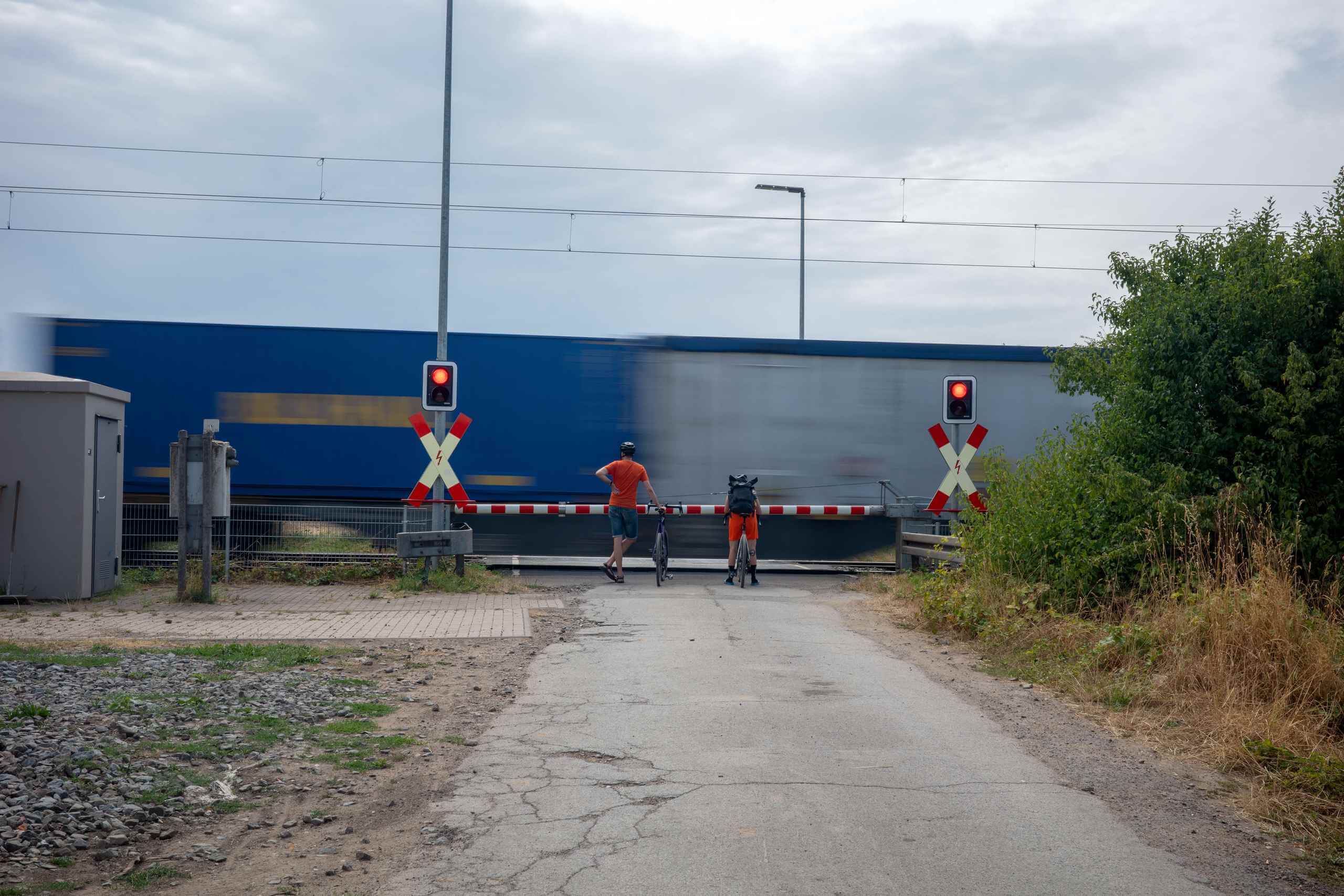
6 Rail Safety Tips for Cyclists
Our friends over at Operation Lifesaver know a thing or two about staying safe around the tracks. Keep their cyclist-specific tips in mind the next time your ride takes you across a railroad crossing.
- Walk Your Bike Across the Tracks
Narrow bike tires can get caught in the space alongside the rails, so when possible, hop off and walk your bike across at a 90-degree angle. - Stick to Designated Crossings
Save the shortcuts for somewhere else. Always cross railroad tracks at a designated public crossing, where you'll find signs and potentially flashing lights or gates to help you cross safely. Crossing the tracks anywhere else is dangerous, considered trespassing, and illegal. - Pause the Playlist
We love a good riding soundtrack, but railroad crossings are one place where it’s essential to hit the pause button. Remove your earbuds and turn off the music as you approach so you can hear what's happening around you — including an approaching train. - Take Extra Care When Tracks Are Wet
Rain can make steel rails especially slippery. If the tracks are wet, get off your bike and walk it across, stepping over the rails rather than directly on them to help keep your footing. - Look Out for a Second Train
One train passing doesn't always mean the tracks are clear. Before crossing, wait until you have a clear view in both directions and check for another train that could be approaching on a second track. - See a Train? Wait It Out.
If the lights are flashing or the gate is coming down, a train is on its way! Stop and wait until the train has passed, the gates are completely raised, and the lights have stopped flashing before continuing your ride. Never go around a lowered gate, whether you're biking, walking, or driving.
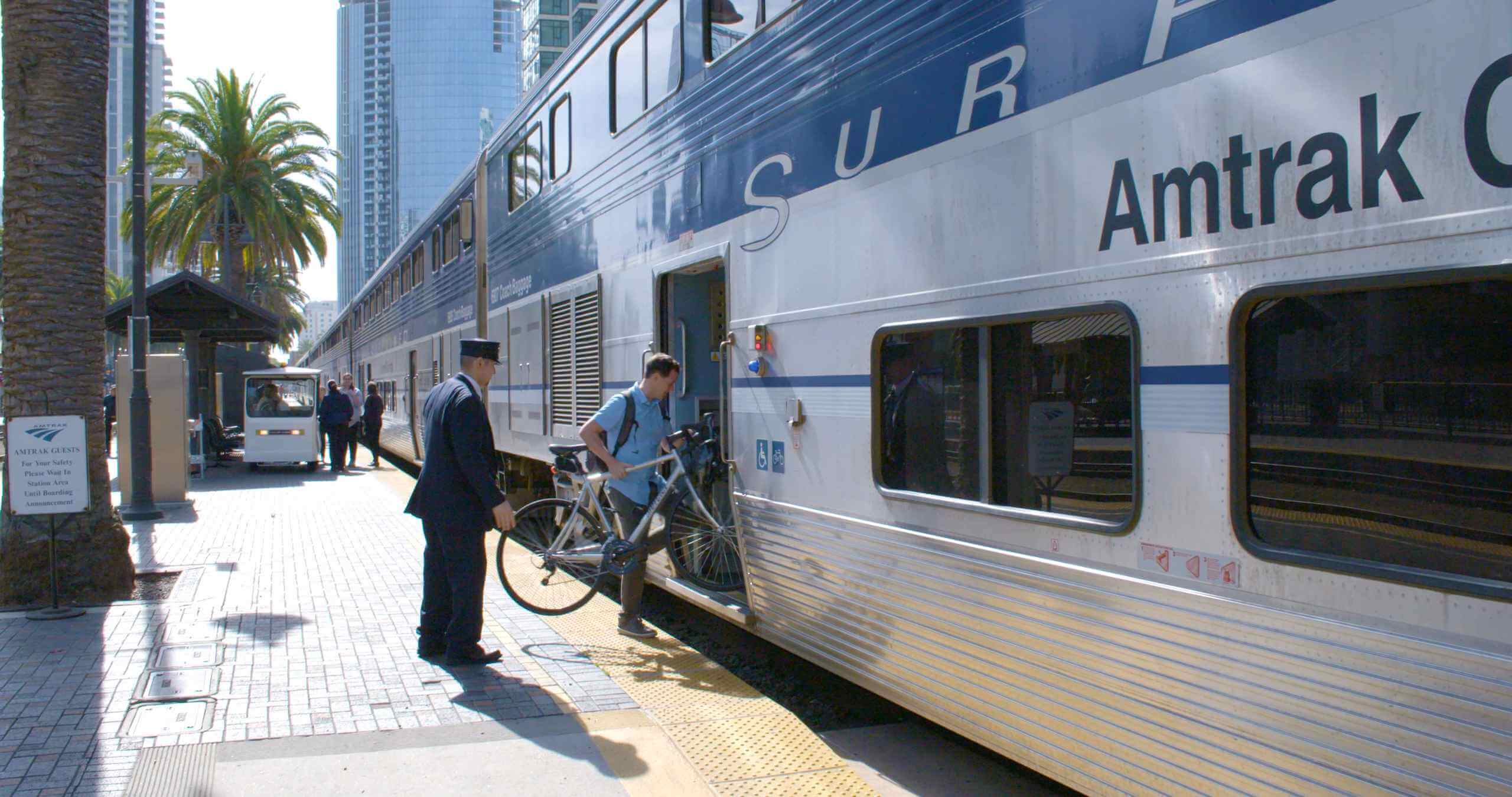
Bringing Your Bike on the Pacific Surfliner
Now that you’ve brushed up on your cyclist rail safety, you’re prepped and ready to turn your train trip into a full two-wheeled adventure. Bikes are welcome aboard the Pacific Surfliner, making it easy to explore even more of Southern California once you step off the train! All you have to do is make a bike reservation when you book your ticket.
Before you pedal away from the station, map out your route, look for designated railroad crossings along the way, and keep these safety tips in your back pocket. Then get out there and enjoy the ride.
Rail Safety Month: Take the Pledge
This September, help us make rail crossings safer for everyone. Pacific Surfliner is partnering with Southern California artist Clarissa Fnu (@sandiegopartybanner) to bring rail safety to life through a series of station posters and banner-inspired artwork reminding our communities to make safe choices around rail crossings.
Take the Rail Safety Pledge and commit to making safe decisions every time you're biking near the tracks. Plus, when you take the pledge, you'll have a chance to win prizes, including a $100 Amtrak Gift Card!
FAQs
Should you ride a bike over railroad tracks?
When possible, Operation Lifesaver recommends dismounting and walking your bicycle across railroad tracks at a designated crossing. Approach the rails at a 90-degree angle to reduce the chance of your wheels becoming caught alongside the rail.
What angle should you cross railroad tracks on a bike?
Cross as close to a 90-degree angle as possible. Crossing at an angle can increase the risk of a narrow bicycle tire becoming caught in the gap alongside the rail.
Is it safe to bike alongside railroad tracks?
No. Railroad tracks, bridges, trestles, tunnels, and other railroad property are not safe places to bike, walk, or use as shortcuts. Only cross tracks at designated public crossings.
What should cyclists do at a railroad crossing?
Slow down, stay alert, remove distractions, obey all signs and signals, and look both ways for approaching trains. Cross only at a designated crossing, and when possible, walk your bike across the tracks at a 90-degree angle.